
Standfirst: Two terms that are used as though they mean the same thing. They do not, and the gap between them is discovered at the worst possible moment.
After a fire, the question an owner faces is not what the building was worth. It is what putting it back actually costs. The answer depends entirely on which basis the cover was calculated on, and that is a question worth settling long before a loss occurs.
The two bases
Replacement cost is the cost of providing a modern building of the same function. Current materials, current methods, a different design if that is what makes sense today. The objective is to restore utility. It is usually the lower figure.
Reinstatement cost is the cost of rebuilding what was there. Matching design, matching materials, matching workmanship. The objective is to restore the original asset. For anything with architectural merit or specialised construction, it is considerably higher.
Both are legitimate. Neither is more correct than the other. What matters is that the sum insured was calculated on the same basis the policy obliges the owner to rebuild on.
What reinstatement carries that people forget
A reinstatement figure is not simply the construction cost.
It includes professional fees, the architects, engineers and consultants required to take the rebuild through approval and construction. It includes debris removal and site clearance, which on a substantial loss is a real cost before any rebuilding begins. And it includes compliance with current statutory requirements, because a building put up thirty years ago will be rebuilt under today's regulations, not the ones that applied when it was first constructed.
None of that is optional, and all of it is part of the figure. Where a sum insured was set on construction cost alone, the shortfall is already built in before anything else goes wrong.
Where the gap comes from
Cover is usually set once and then escalated by a percentage each year at renewal. Nobody goes back to the asset. In the meantime construction costs move faster than a standard annual increase, imported materials and plant are exposed to exchange rate movement, transport cost changes and buildings get extended or altered without the schedule being updated.
The escalation feels like maintenance of the position. In practice it is a slow drift away from it.
Heritage and specialised assets
The distinction is at its sharpest where an asset cannot meaningfully be replaced at all.
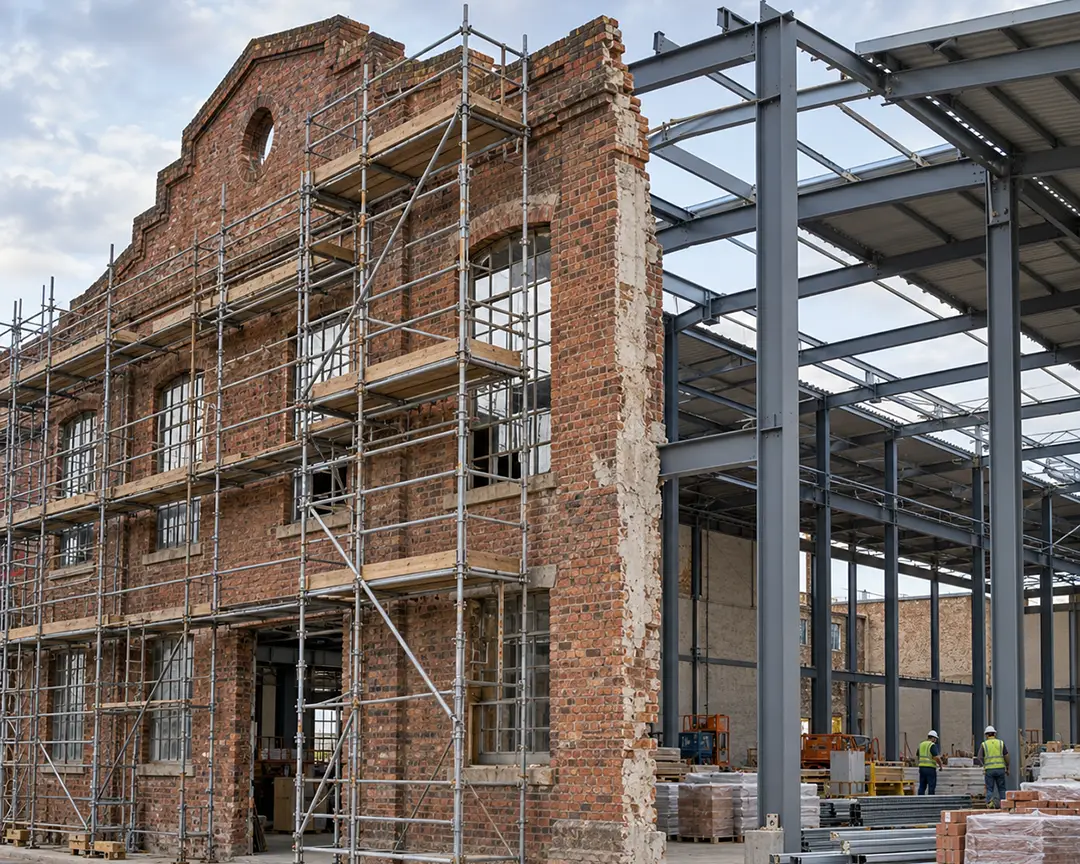
A heritage building can only be reinstated. That means matching original materials, original methods and craftsmanship that is more difficult to source every year. A modern structure of the same size and function can be put up for a fraction of the cost, and it would not be the same building.
The same principle applies well beyond heritage property. Purpose built structures, specialised plant, equipment that is no longer manufactured. What something cost, and what it would take to put it back, are two entirely different figures.
What to check
Three questions are worth putting to whoever holds the policy.
Which basis is the cover written on, reinstatement or replacement.
Which basis was the sum insured calculated on, and when was it last established rather than escalated.
Does the sum insured include professional fees, debris removal and the cost of meeting current statutory requirements.
If those three answers do not line up, the shortfall exists now. It simply has not been tested yet.
The point
A valuation prepared for insurance purposes is not the same as a market valuation, and neither is the figure in the financial statements. Each answers a different question. Using one where another is required is the most common error we see, and insurance is where it does the most damage, because it is only ever discovered after a loss. This would result in the insurer applying averaging.
Establishing the right figure on the right basis is a straightforward exercise. Discovering the wrong one at claim stage is not.
At TPP, #WeValueYourAssets
For professional valuation advice, speak to a TPP valuer: propval@tpp.co.za